
Application engineering
Fine Blanking for Wheel Components
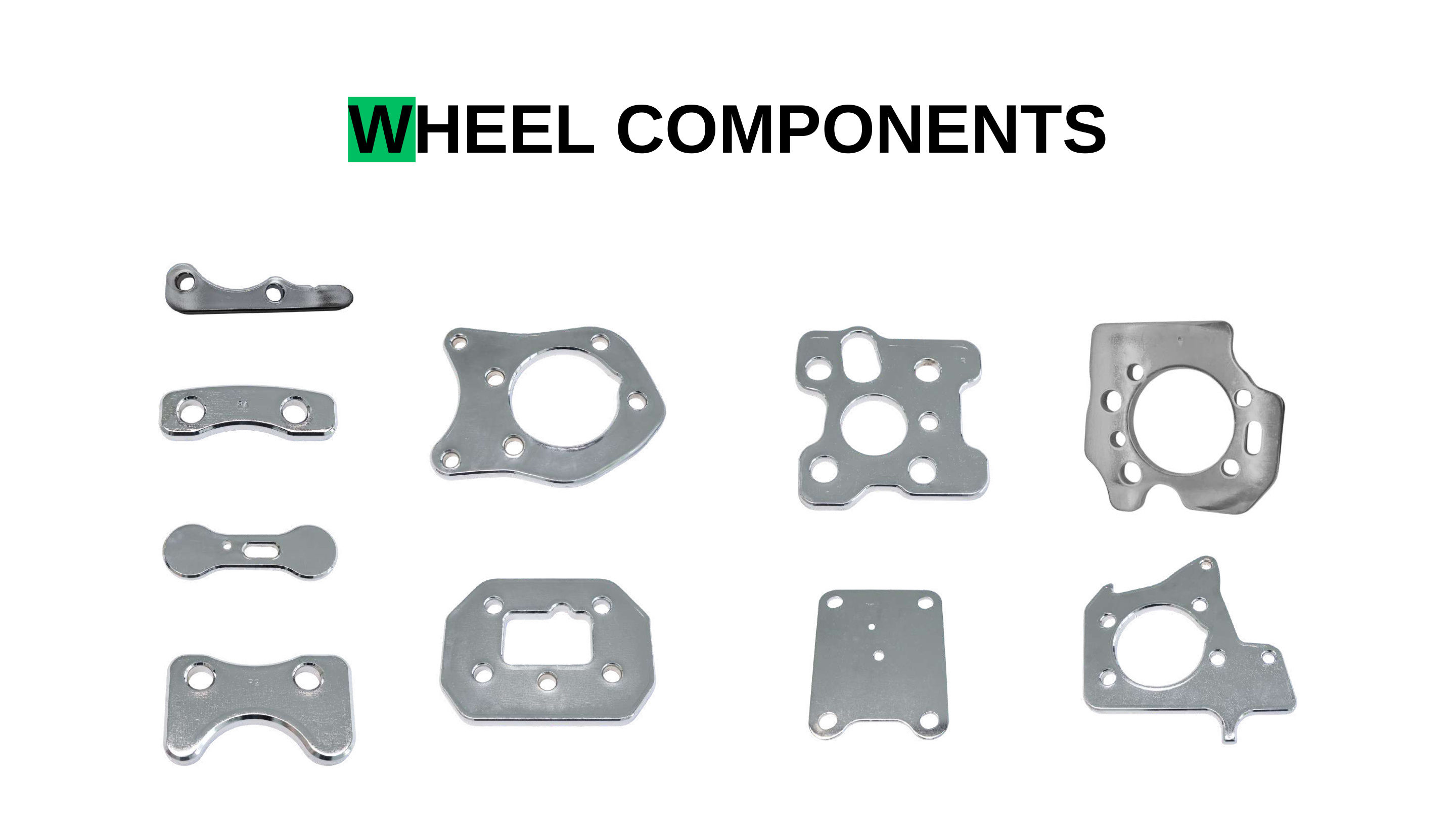
Wheel brackets, mounting plates and formed wheel-area metal parts need a process plan that protects edge quality, flatness, functional geometry and production cost from the first RFQ review.
Buyer pain
Why this part family needs more than a generic press quote.
Wheel-area brackets and mounting plates often carry thick sections, tight mounting relationships and fatigue-sensitive edges. The real risk for buyers is choosing a press that can cut the part but cannot keep hole position, flatness and burr direction stable over long runs.
HFB starts with the actual drawing, material, tolerance zone, burr direction, annual quantity and current production problem, then recommends the press, die and line scope that fits the part.
Process route
Fine blanking feasibility and tooling focus.
HFB reviews projected cutting area, high-strength material behavior, strip layout and ejection force before recommending press capacity. For wheel-area parts, counter pressure margin and die rigidity are usually more important than a simple tonnage label.
Line configuration
Equipment selected around the part, not a fixed package.
Recommended scope normally includes an HF-500 to HF-1000 class review, servo feeding, reinforced die guidance and part collection that avoids edge damage.
RFQ data
Send the details that make the recommendation useful.
- 2D/3D drawing with critical dimensions marked
- Material grade, thickness, hardness and surface condition
- Required shear surface, burr direction and flatness target
- Annual quantity, current process route and quality pain
- Existing press brand/model if this is a die or retrofit project
Next step
Get a practical review before investing in tooling or equipment.
For wheel components, HFB can compare fine blanking, die design, feeding, deburring and refurbishment options so the final route reduces secondary work instead of moving the problem to another process.